
Acid Rain Effects
To simulate acid rain and observe its effects on different materials including plants and building materials
Theory & Background
Acid rain forms when air pollutants like sulfur dioxide and nitrogen oxides react with water in the atmosphere. This creates acidic precipitation with a pH lower than normal rain. Acid rain can damage plants, buildings, and aquatic ecosystems.
Required Materials
- White vinegar
- Water
- pH strips
- Plant seedlings
- Limestone or chalk
- Metal samples (nails)
- Spray bottles
- Measuring cups
Estimated Time
Setup: 30 minutes, Observation: 1 week
Step-By-Step Procedure
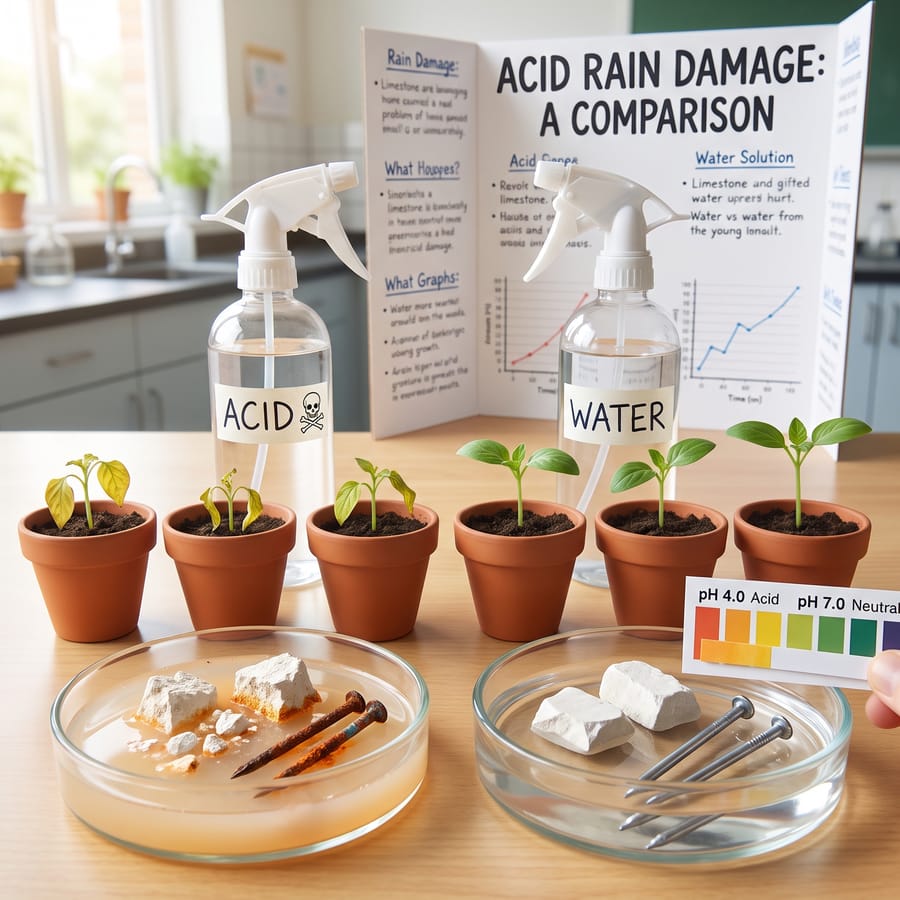
Create simulated acid rain by mixing vinegar with water (1:4 ratio) and test pH.
Set up control groups with plain water and experimental groups with acid solution.
Spray some plant leaves daily with acid solution, others with plain water.
Submerge limestone pieces and metal nails in both solutions.
Observe and photograph changes daily for one week.
Record any discoloration, erosion, or damage to materials.
Compare the condition of test materials versus controls after one week.
⚠️ Experiment Tips
- Take before and after photos to document changes clearly.
- Use protective equipment when handling acidic solutions.
- Consider testing different pH levels to see varying degrees of damage.
- Discuss how this relates to real-world environmental protection.
Observation
Plants sprayed with acid solution show browning or yellowing of leaves. Limestone samples show visible erosion and pitting. Metal nails develop rust more quickly in acidic solution compared to controls.
Result & Conclusion
Acid rain causes significant damage to both living and non-living materials. This experiment demonstrates how air pollution can create environmental problems that affect plant health and building integrity over time.