
Binary Code Messages
To learn how computers store and process information using binary code and create encoded messages
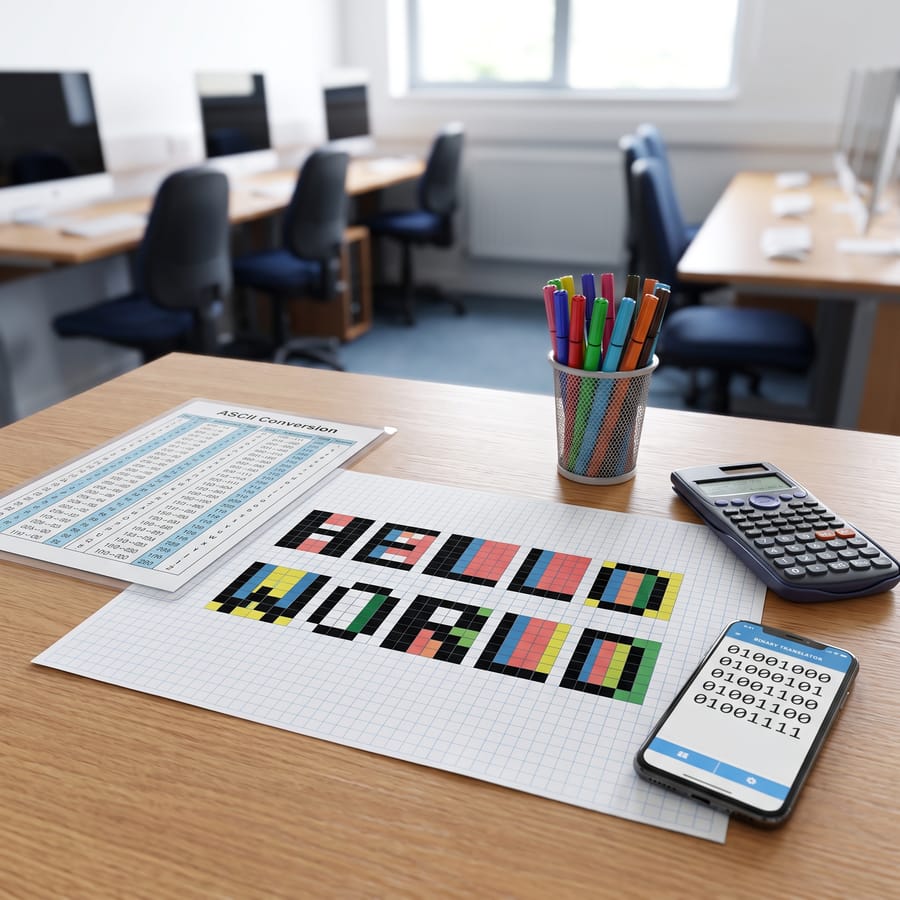
Theory & Background
Computers use binary code (base-2) to represent all information using only 1s and 0s. Each letter, number, and symbol has a unique binary representation. Understanding binary helps explain how digital devices store and transmit data.
Required Materials
- ASCII conversion chart
- Grid paper
- Colored markers or pencils
- Calculator
- Computer or smartphone for verification
Estimated Time
45 minutes to 1 hour
Step-By-Step Procedure
Learn the ASCII binary code for letters A-Z (A=01000001, B=01000010, etc.).
Choose a simple message to encode (start with your name).
Convert each letter to its 8-bit binary representation.
Create a visual representation using colored squares (1=black, 0=white).
Have a friend try to decode your binary message.
Try encoding numbers and symbols using ASCII codes.
Create a secret message system using binary patterns.
⚠️ Experiment Tips
- Start with short messages to avoid errors.
- Double-check binary conversions using online tools.
- Create a key for friends to decode your messages.
- Try encoding emoticons or simple drawings in binary.
Observation
Each letter requires 8 binary digits (bits) to represent. Patterns emerge where similar letters have similar binary codes. The visual representation creates distinct patterns for each character.
Result & Conclusion
Binary code efficiently represents all textual information using just two symbols. This foundational concept enables all digital communication and data storage in modern computing devices.