

Magnetic Levitation
To demonstrate magnetic repulsion and create floating objects using magnetic forces
Theory & Background
Magnetic levitation occurs when magnetic forces overcome gravitational forces to suspend an object in air. When like magnetic poles face each other, they create repulsive forces that can lift and suspend objects. This principle is used in real-world applications like maglev trains and magnetic bearings. Understanding magnetic forces helps us explore the fundamental physics of magnetism and electromagnetic interactions.
Required Materials
- 4-6 strong neodymium magnets
- Pencil with metal ferrule
- Small paperclip or iron filing
- Non-metallic tube (plastic straw)
- Tape
- Wooden blocks or books for support
Estimated Time
30-45 minutes
Step-By-Step Procedure
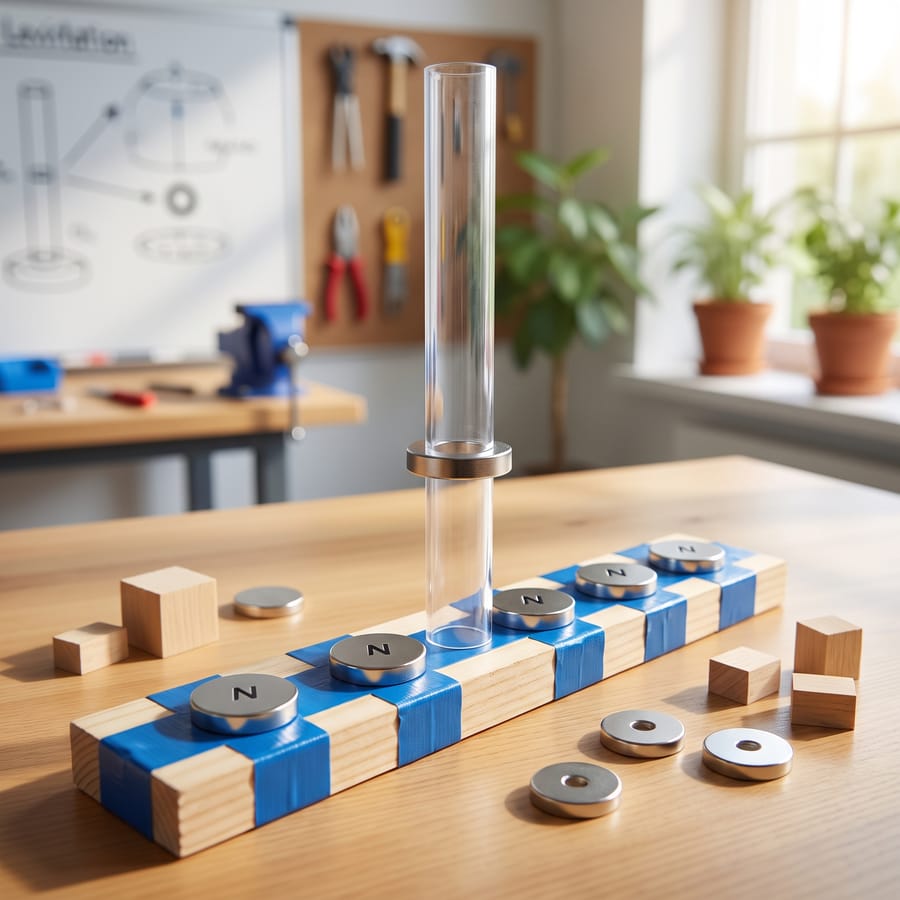
Create a magnetic track by taping several magnets end-to-end with the same poles facing upward.
Place a small magnet inside the plastic straw with the same pole facing down toward your track.
Support the straw vertically using books or blocks so it hovers above the magnetic track.
Carefully lower the straw until the magnet inside repels against the track magnets and floats.
Experiment with different magnet arrangements and observe the floating behavior.
Try gently pushing the floating magnet and observe how it returns to its position.
Experiment Tips
- Strong neodymium magnets work best - handle carefully as they can pinch fingers.
- Ensure all magnets on the track have the same pole facing upward for consistent repulsion.
- The straw helps keep the floating magnet aligned and prevents it from flipping over.
- Stable levitation requires practice - start with small adjustments to find the sweet spot.
Observation
When positioned correctly, the magnet floats stably above the track without touching. Small disturbances cause it to wobble but it returns to its equilibrium position. The floating magnet maintains a consistent distance from the base magnets.
Result & Conclusion
Magnetic levitation demonstrates the balance between magnetic repulsion and gravitational forces. This experiment shows fundamental principles used in modern transportation and industrial applications where friction-free movement is desired.