
Sorting Algorithm Race
To compare the efficiency of different sorting methods and understand algorithmic thinking
Theory & Background
Sorting algorithms arrange data in a specific order. Different algorithms have varying efficiency depending on the data size and organization. Understanding algorithmic efficiency helps computer scientists choose the best approach for specific problems.
Required Materials
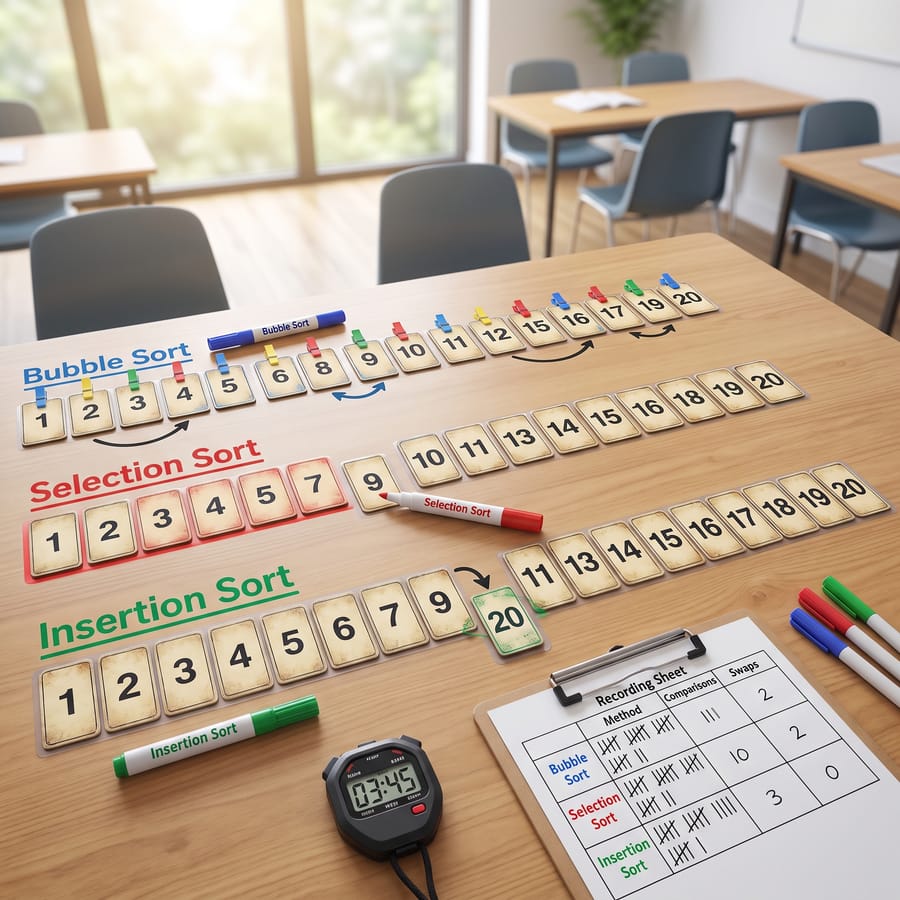
- Playing cards or numbered papers
- Stopwatch
- Recording sheets
- Different colored markers
- Video camera (optional for analysis)
Estimated Time
1-2 hours
Step-By-Step Procedure
Create several identical sets of randomly shuffled cards (numbers 1-20).
Learn three sorting methods: Bubble Sort, Selection Sort, and Insertion Sort.
Time how long each method takes to sort the same shuffled deck.
Record number of comparisons and swaps for each algorithm.
Repeat with different starting arrangements (reverse order, nearly sorted).
Test with different sized datasets (10 cards, 20 cards, 30 cards).
Graph results to show how performance changes with data size.
⚠️ Experiment Tips
- Practice each sorting method before timing to ensure consistency.
- Use a helper to time while you focus on sorting accurately.
- Try to maintain consistent hand movements to reduce timing variations.
- Consider what makes one algorithm more efficient than another.
Observation
Different algorithms perform differently depending on the initial arrangement of data. Some methods are faster with nearly-sorted data, while others maintain consistent performance regardless of starting conditions.
Result & Conclusion
Algorithm choice significantly impacts performance. This experiment demonstrates computational thinking and helps explain why computer scientists study algorithm efficiency when designing software systems.