

Accelerate Rusting
To demonstrate how a chemical reaction from vinegar, water, and bleach can accelerate the rusting process of steel.
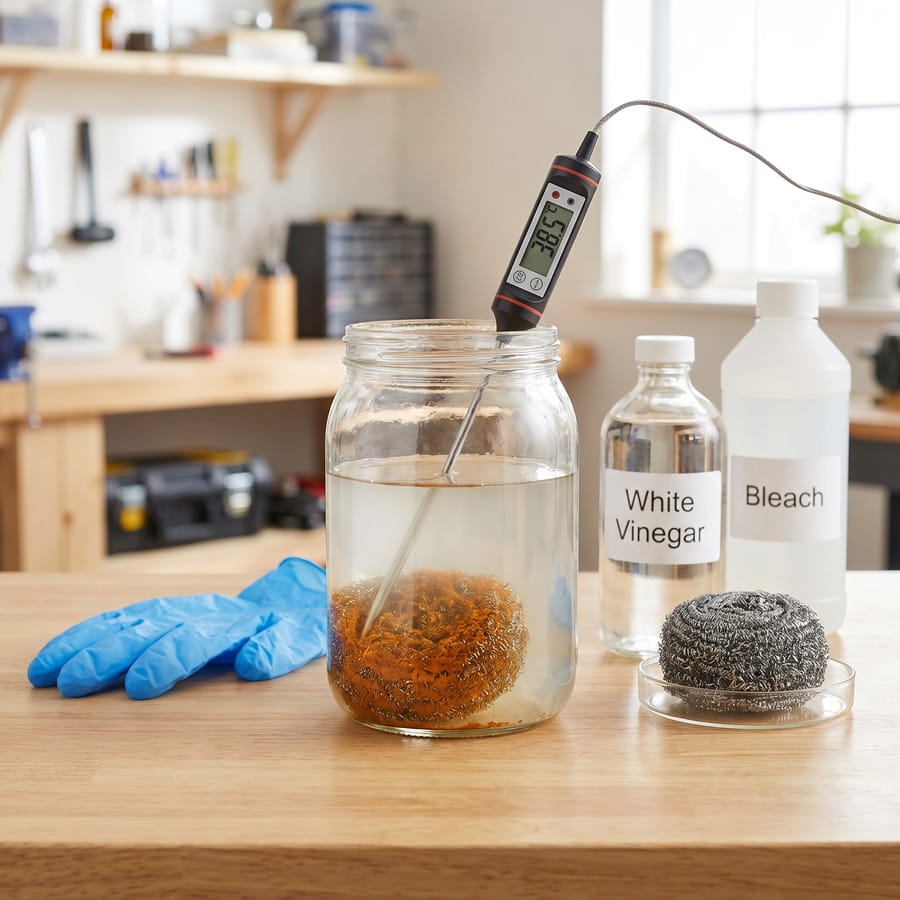
Theory & Background
Have you ever wondered about the amazing properties of water? Rust is a series of red oxides that form from the reaction of iron with the presence of oxygen and water. The rusting process is electrochemical, meaning it forms from a chemical reaction which takes place in a solution where there is an electron transfer between the electrode and the electrolyte or species in solution. In the case of rusting, the transfer of electrons from iron to oxygen begins the electrochemical process. Electrolytes accelerate the corrosion process when combined with water, similar to the rusting that occurs on vehicles due to road salt in winter conditions.
Required Materials
- Steel wool pads (the soap-free kind)
- Medium sized jar
- Water
- Vinegar
- Bleach
Estimated Time
About 5 minutes to conduct, a few hours for the rust to form.
Step-By-Step Procedure
Place the steel wool pad into the jar.
Fill the jar with water so the steel wool pad is completely submerged
Pour in a dash of vinegar and a dash of bleach.
Wait a few hours and watch how your shiny steel wool bad quickly rusts!
Experiment Tips
- Be careful handling bleach! You may want to consider wearing a set of latex gloves when handling the bleach chemical.
Observation
Why is the steel wool rusting at such a rapid pace? How do you think the chemical reaction of the combined elements affects the steel pad? How do you think you could prevent rust from occurring on the steel pad under the same conditions?
Result & Conclusion
Rust forms when iron is combined with oxygen and water. The vinegar strips any protective coating off the steel wool and the oxygen in the bleach combines with the iron in the steel. This makes the wet steel go rusty very quickly. If you wrap the steel around the bulb of a thermometer, you should be able to see the temperature rise. This is because the chemical reaction gives off heat.