

Chemical Metamorphosis
To find out what chemical change is and be able to answer the question, “Can a material form a new substance when exposed under a given condition?”
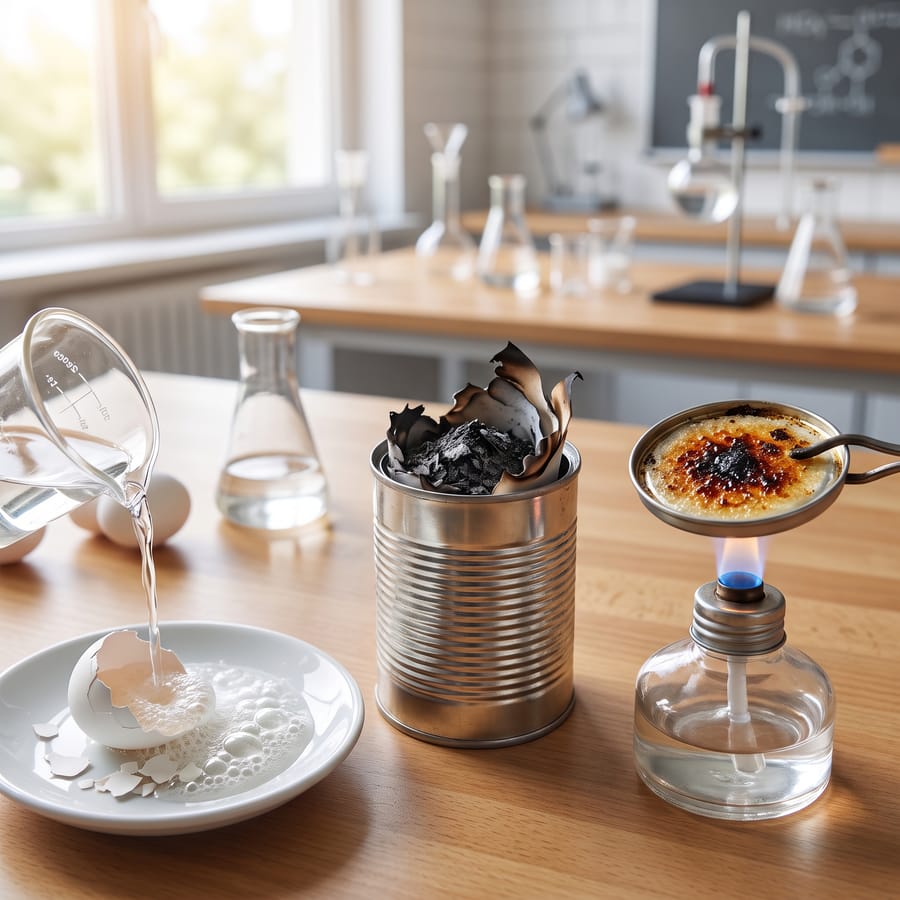
Theory & Background
Have you ever wondered about this fascinating scientific process? All materials found in the environment undergo certain changes. These changes are classified into physical change and chemical change. Physical change happens when materials undergo changes in size and shape without changing the composition. Stretching, breaking, pounding, cutting, and bending bring about physical change. Materials can change from one state to another. Solids can change to liquid, liquid to solid, and solid to gas. These are physical changes that may be brought about by the absorption or release of heat. On the other hand, a chemical change involves the transformation of a material into a new substance. Addition of chemicals such as acids and absorption of heat are factors needed for chemical change to occur. The presence of bubbles, a change in color, and release of heat indicate a chemical change.
Required Materials
- piece of paper
- empty can
- eggshell
- saucer
- vinegar
- teaspoon
- white sugar
- lid of an infant formula can
- alcohol lamp
- matches
- clamps
Estimated Time
Approximately 30 minutes
Step-By-Step Procedure
Burn a crumpled piece of paper in an empty can and set aside.
Pound an empty eggshell into small pieces and place the pieces on a saucer.
Add a teaspoonful of sugar into them and set aside.
Put a teaspoonful of sugar on the lid. Burn the sugar using the alcohol lamp. Use the clamps to hold the can in place over the lamp.
Experiment Tips
- Do not play with the fire. D not touch the can when the paper is burning since it is hot. Do not taste the eggshell with vinegar. Be careful in using fire especially when burning sugar. Hold the lid carefully and do not touch the burning sugar.
Observation
What changes took place when you burned the paper? What was formed when you added vinegar to the broken pieces of eggshell? What does this indicate? Describe the color, appearance, and smell of the burnt sugar. Did the sugar change into something else?
Result & Conclusion
When the paper was crumpled, it underwent a physical change. It changed in size and shape but was still paper. The paper when burned formed ashes, water vapor, and smoke. Burning causes materials to change. It formed new products. When the eggshell was pounded into pieces, it changed in size and shape. However, when vinegar, a kind of acid, was added to the broken pieces of eggshell, bubbles were produced. The formation of bubbles indicated that carbon dioxide was released in the air. Carbon dioxide, a new substance, was formed due to the action of an acid like vinegar. Burnt sugar has a black charcoal appearance, bitter taste, and distinct smell. These characteristics indicate that white sugar lost its original properties when heated. Burnt sugar released water vapor and formed a new substance called carbon.