

Home-Made Glue #1
To create a light, non-toxic, and environmentally friendly glue from household products.
Theory & Background
Have you ever wondered about this fascinating scientific process? We've all used glue at one point or another. That adhesive compound that comes in a liquid of semi-liquid state can't be avoided, especially when were in school! One of the most common brands of glue is Elmer's Glue. Contrary to popular belief, Elmer's Glue is NOT made from horses, cows, or any other mammal. Instead Elmer's Glues are chemical based and formulated from synthesized, man-made, chemicals.
Required Materials
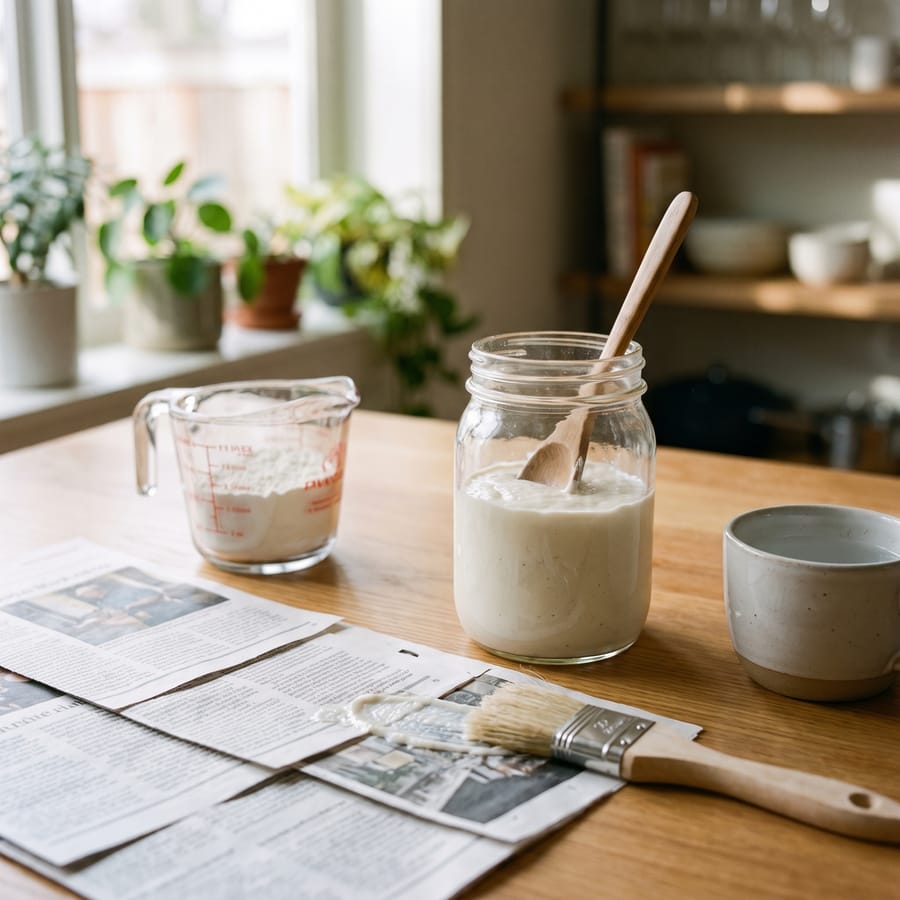
- All purpose flour
- Water
- Jar with a lid
- Spoon
- Brush
- Newspaper
Estimated Time
Less than 5 minutes to make the glue, about 15 minutes for it to dry (when applied)
Step-By-Step Procedure
Mix one cup of flour with one-half a cup of water together in the jar. Use the spoon to make sure the mixture is stirred well. This will become your glue.
Use your glue mixture to glue the newspaper into various shapes. Do this by brushing the glue onto the newspaper and attaching the edges to the glued area.
Let the glued newspapers sit for about 15 to 30 minutes. What happens?
Experiment Tips
- The glue won't be as strong as traditionally glue, but you'll find it very effective when gluing paper. Best of all, the glue is completely environmentally friendly! Store your left-over glue in your air-tight jar in your refrigerator.
Observation
After your newspaper has dried, what happens when you lightly tug on the section that you glued? Does it come apart easily, or does it stick? Compare the strength of your homemade glue against store-bought glue. To do this, create a secondary shape with a new piece of newspaper. Instead of using your home-made glue, use some Elmer's glue (or equivalent). Let the glue dry. Compare and contrast the strength of the two glued newspapers. Is one stronger than the other? If so, which one?
Result & Conclusion
A chemical reaction occurs (evaporation of water) as the "glue" begins to dry, making it hard. This is the same process occurs when you leave the lid of a bottle of Elmer's Glue open for too long. Eventually the exposure to the atmosphere will cause the water to evaporate and make the glue harden.