Invisible Fire
To observe combustion of different alcohols and understand how flame color indicates temperature and chemical composition
Theory & Background
Different alcohols burn with flames of varying visibility and color. Methanol burns with an almost invisible flame, while isopropyl alcohol produces a more visible blue flame. This occurs because complete combustion produces different amounts of carbon particles and excited molecules that emit light at different wavelengths. The color and visibility of flames depends on the chemical structure of the fuel and the temperature of combustion. Understanding these properties helps us identify substances and study combustion chemistry.
Required Materials
- Isopropyl alcohol (rubbing alcohol)
- Methanol (with adult supervision)
- 2 small metal dishes or spoons
- Lighter or matches
- Safety goggles
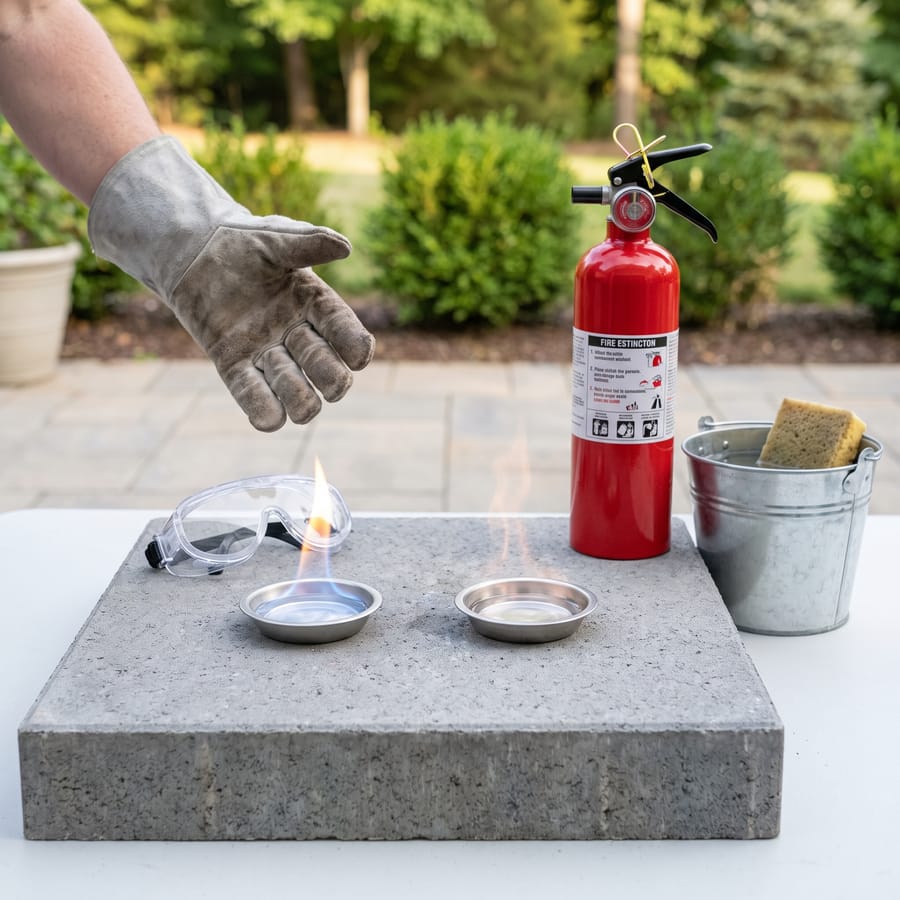
- Fire extinguisher or water nearby
Estimated Time
Approximately 20-30 minutes
Step-By-Step Procedure
Set up your workspace outdoors or in a well-ventilated area. Have an adult present and safety equipment ready.
Pour a small amount (about 1 teaspoon) of isopropyl alcohol into one metal dish.
Pour the same amount of methanol into the second dish (adult supervision required).
Put on safety goggles and carefully light the isopropyl alcohol first. Observe the flame color and visibility.
Allow the isopropyl flame to burn out completely, then light the methanol. Compare the visibility of the flames.
Record your observations about flame color, visibility, and burning characteristics.
Experiment Tips
- ADULT SUPERVISION REQUIRED. This experiment involves fire and flammable chemicals.
- Conduct experiment outdoors or in a well-ventilated area away from flammable materials.
- Have a fire extinguisher or large amount of water nearby for emergency use.
- Never leave burning alcohol unattended and ensure flames are completely extinguished.
Observation
The isopropyl alcohol burns with a visible blue-orange flame. The methanol burns with an almost invisible blue flame that is difficult to see in daylight. Both produce heat and consume oxygen during combustion.
Result & Conclusion
Different alcohols produce flames of varying visibility due to their chemical composition. Methanol's clean combustion produces fewer visible carbon particles, resulting in a nearly invisible flame. This demonstrates how chemical structure affects combustion characteristics and flame properties.