

Theory & Background
Have you ever wondered about the amazing properties of water? Limestone is a sedimentary rock mostly composed of the mineral calcite, a carbonate material, and contains variable amounts of silica from flint and chert along with clay, sand, and silt. The calcite in limestone is primarily made up of marine organisms whose shells secrete and settle on the ocean floor. Calcium carbonate is the main component that forms shells on marine life. It's also the active ingredient that causes hard water in many households. Calcium carbonate occurs naturally in various minerals such as travertine, marble, and limestone and is the most common substance found in rock.
Required Materials
- Shoe box
- Small plastic garbage bag
- Paper cups
- Dry plaster
- Water
- Pieces of shell
Estimated Time
About 15 minutes to set-up and prepare, 5 days for the limestone to form.
Step-By-Step Procedure
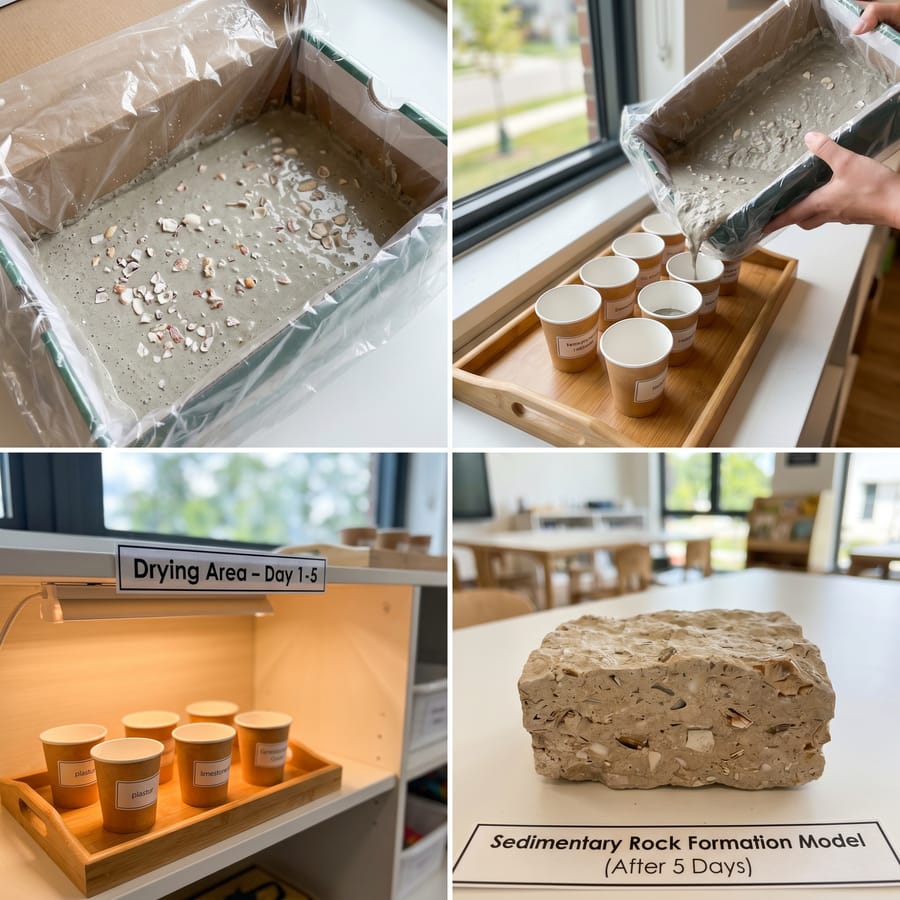
Line the shoebox with the plastic garbage bag. If the bag is too large, cut it down so that it lines the shoebox snugly.
Add the dry plaster and water to the shoebox, mixing thoroughly.
Add your shell pieces into the shoebox and mix them into the plaster mixture.
Pour the mixture into your paper cups.
Place the cups in a warm area, such as inside a kitchen cabinet or a bedroom drawer. Leave undisturbed for about 5 days.
After 5 days, remove the limestone mixture from the cups.
Experiment Tips
- There is no specific measurements needed for this experiment, so feel free to put in as much shell as you want. The shells can be any size, but favor smaller shells for better quality limestone.
Observation
What does your limestone look like and feel like? How does it compare to natural limestone?
Result & Conclusion
Limestone is a type of sedimentary rock made up mostly of calcium carbonate. When microscopic marine animals and life die, they fall to the ocean floor where their shells (hard parts) collect. As the shells collect over time, limestone is formed.