

Milky Plastic
To demonstrate the separation of casein from milk, forming a milky plastic substance.
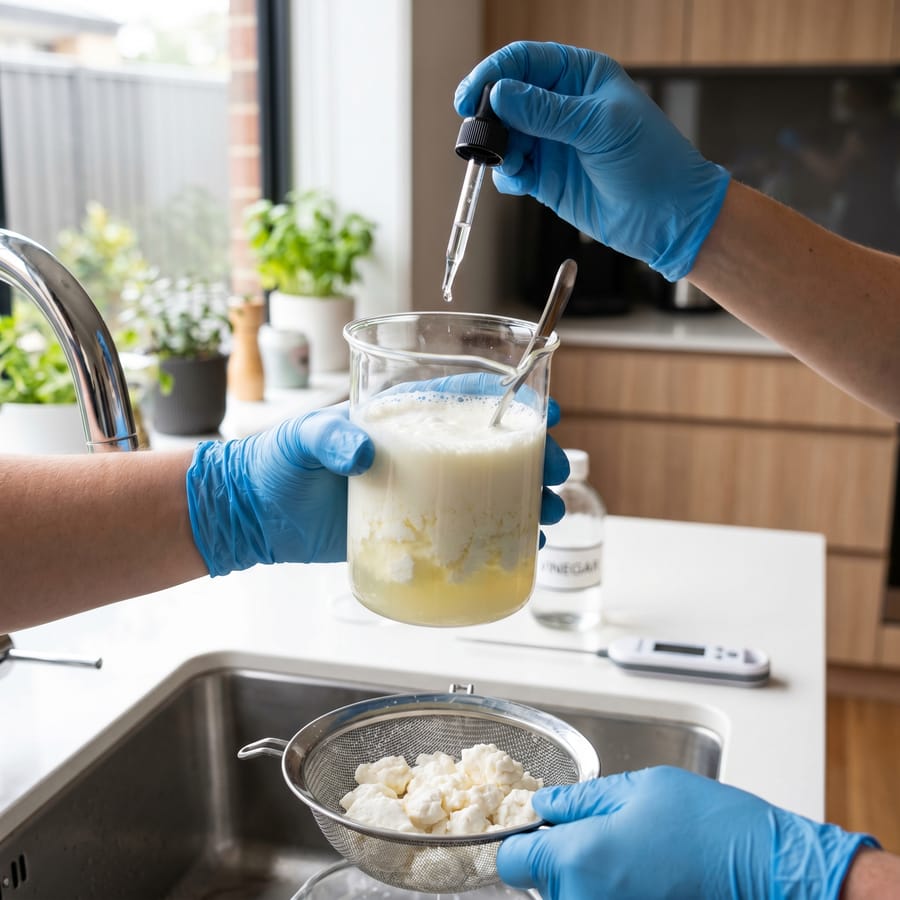
Theory & Background
Have you ever wondered about this fascinating scientific process? Casein is the predominant phosphotien (a group of proteins which are chemically bonded to a substance containing phosphoric acid) that accounts for the majority of proteins found in milk and cheese. In addition, casein is used in manufacturing of various goods including fabrics, adhesives, plastics, and protective coatings.
Required Materials
- Glass full-cream milk
- Vinegar
- Eye dropper
- Long spoon or stir stick
Estimated Time
Less than 10 minutes
Step-By-Step Procedure
Ask an adult to help you warm the milk by placing it into the microwave for a minute or placing it in a bowl of hot water
Fill the eye dropper with vinegar
Slowly squirt the vinegar into the warm milk and stir with the spoon or stir stick
Make sure the mixture is not too hot, then slowly pour the milk out onto your hand (over the kitchen sink), "catching" the plastic in your fingers.
Experiment Tips
- Make sure the mixture is not too hot when pouring it over your hand! A mixture that's too hot will not only burn, it won't be the most effective for the experiment.
Observation
What appears to happen when the vinegar is squirted into the glass of milk and stirred? When the milk is poured from the glass, were you able to capture the milky plastic particles?
Result & Conclusion
The milk contains a chemical called casein. Casein can be separated from the rest of the milk using vinegar. This is a type of plastic, which is a chemical made of long chains of many small parts (atoms) joined together.