

Theory & Background
Did you know that air around us has incredible properties? Calcium is the chemical element with the atomic number 20 and the CA symbol. It’s the 5th most abundant element by mass in the earths crust. An important component of a healthy diet, calcium is essential for healthy and strong teeth and bones. Long-term calcium deficiencies can lead to numerous medical conditions and problems, including rickets, poor blood clotting, and possibly ostereoporosis. Furthermore, life-term deficiencies can lead to impaired kidney function, poor bone formation, and poor teeth formation. High sources of calcium exists in milk, cheese, and other diary products. Some people, however, are lactose intolerant or avoid milk-based products for ethical and health reasons (such as Vegans). Fortunately, there are many good sources of calcium that exist beyond dairy products. These sources include seeds and nuts (like almonds), kelp and wakame (types of seaweed), oranges, figs, okra, and calcium fortified products such as orange juice or soy milk. One other source that's high in calcium that is often overlooked is the eggshell, which can be ground into powder and mixed with other foods.
Required Materials
- 1 egg
- Drinking glass
- Vinegar
Estimated Time
Several days (at least 3)
Step-By-Step Procedure
Gently place the egg in the empty drinking glass
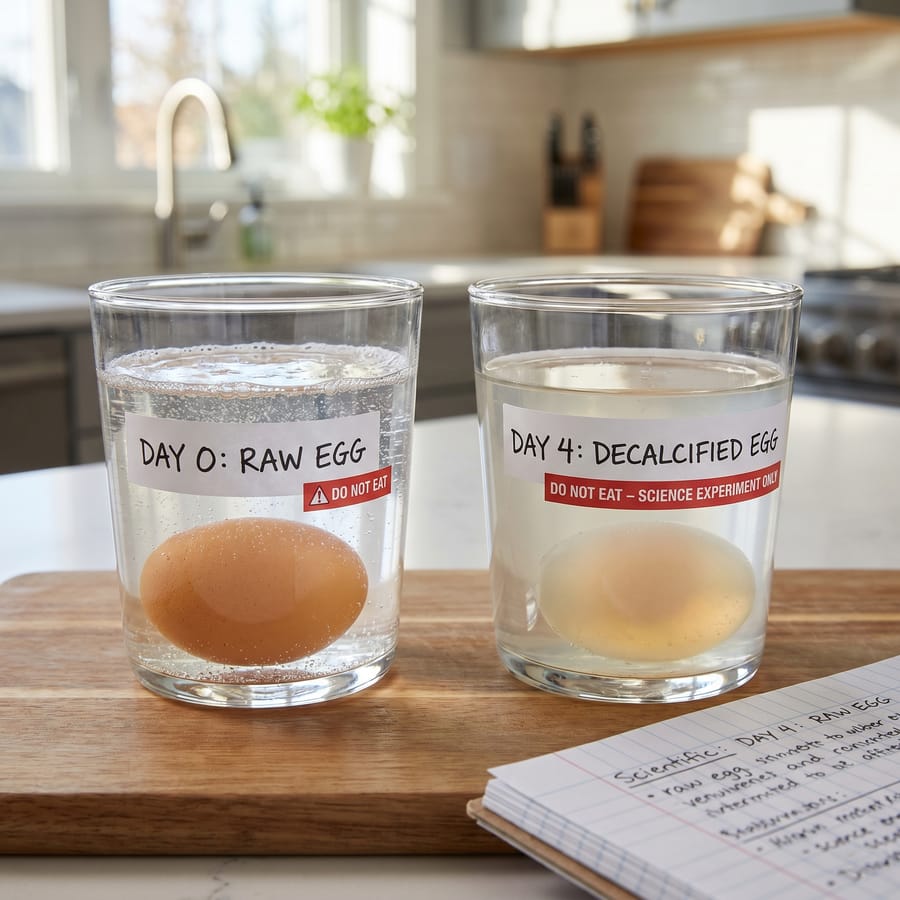
Pour the vinegar over the egg until it's completely covered
Wait several days and take the egg out of the vinegar
Experiment Tips
- It's important to wait out the experiment and not disturb the egg before it's time to remove it. After 3 or 4 days the egg will be ready for observation and handling and your patience will pay off.
Observation
What do you think is happening to the egg while it's submerged in the vinegar? What part do you think the vinegar plays in causing the egg to form its rubbery state?
Result & Conclusion
The vinegar reacts with the calcium in the eggshell, causing the calcium it to dissolve. This makes the shell rubbery. This shows the importance of calcium to make the shell strong, just like our bones. So, the next time you reach for a soda, think of this experiment and grab a glass of milk instead!